

Lake · 650 m
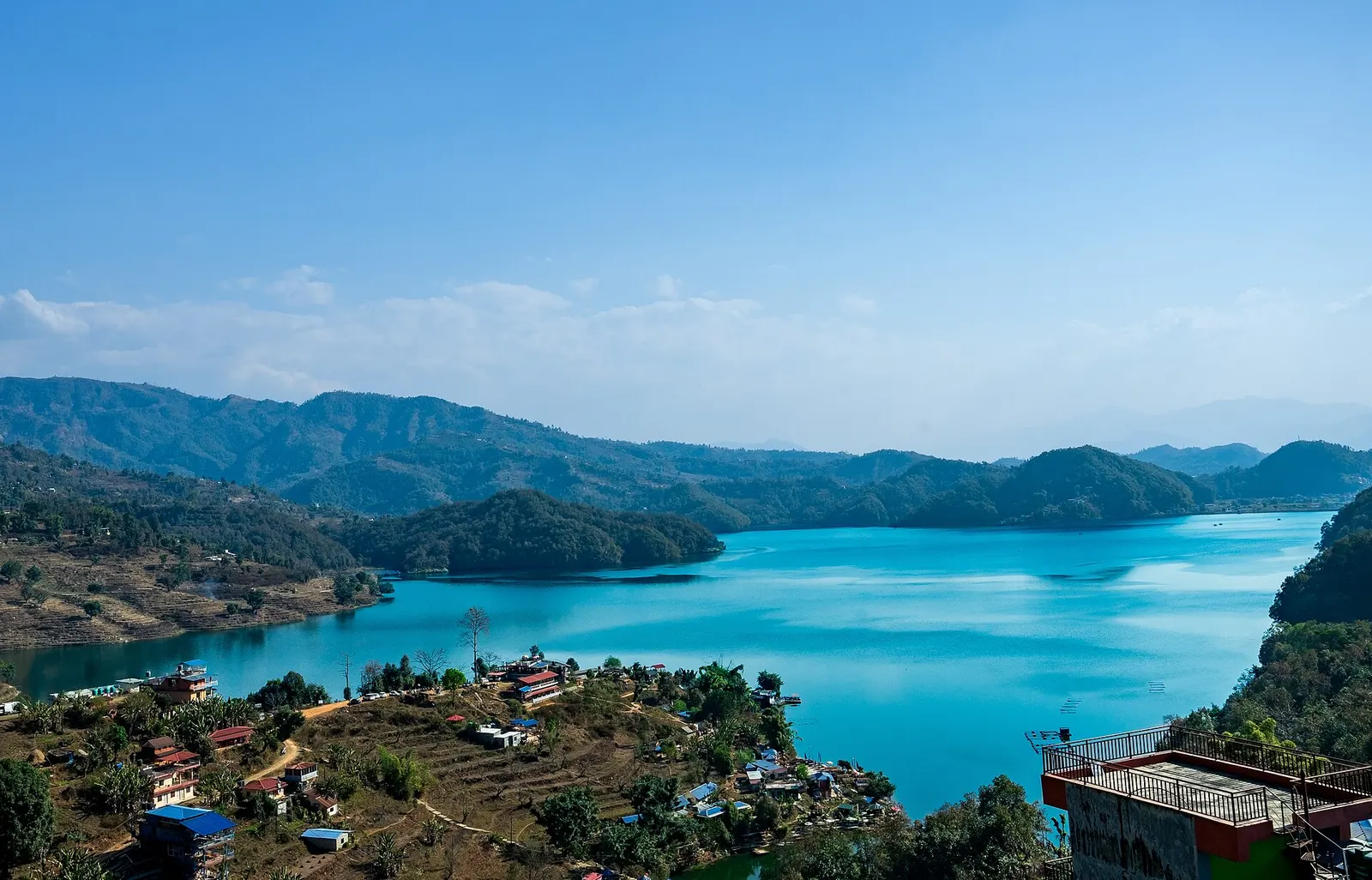
Begnas Lake
A quieter freshwater lake in the east of the Pokhara valley, ringed by forested ridges, rice terraces and fish farms.
Pokharaविश्व शान्ति स्तूप
A white Buddhist peace stupa on Anadu Hill, looking over Phewa Tal and Pokhara to the Annapurna range.
The Shanti Stupa on Anadu Hill above Phewa Tal in Pokhara, not the World Peace Pagoda in Lumbini or the Shanti Stupas in India.
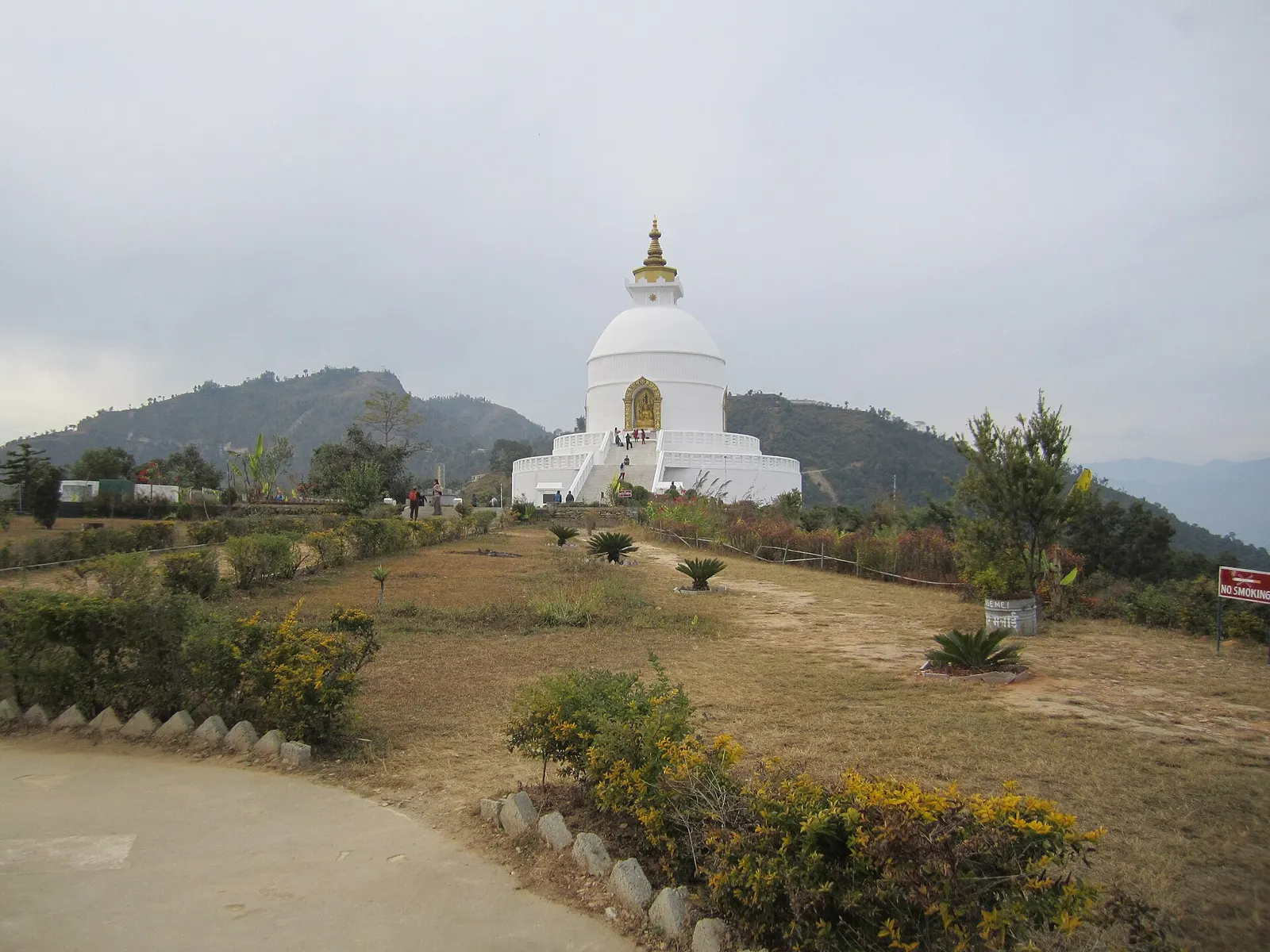
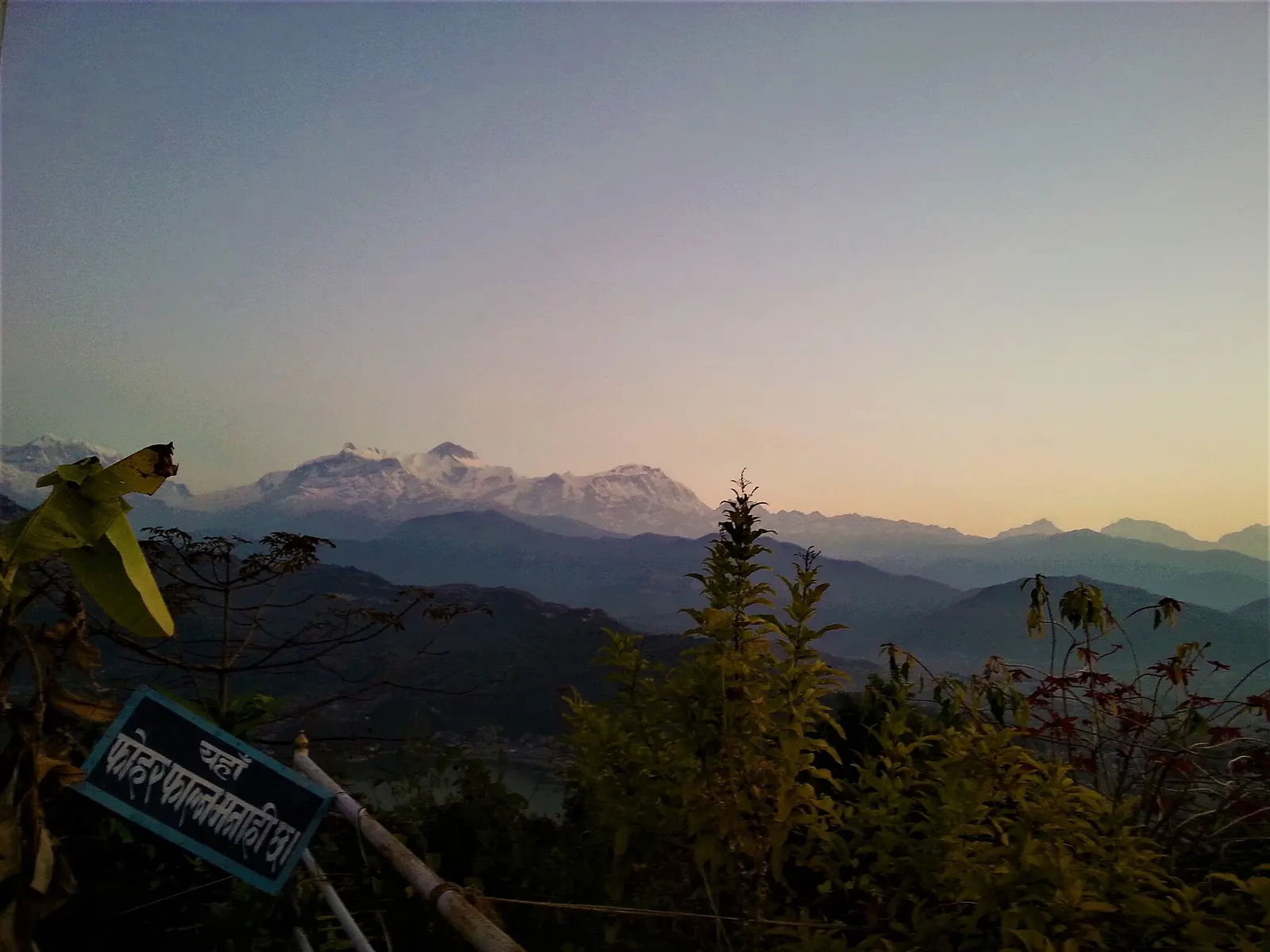
The World Peace Pagoda, or Shanti Stupa, crowns Anadu Hill on the forested ridge along the south shore of Phewa Tal, at about 1,100 m, some 300 m above the lake. Its white dome and gilded spire are visible from much of Lakeside. From the terraces around the stupa the whole lake spreads below, with Pokhara city to the east and, on clear mornings, Dhaulagiri, the Annapurnas and Machhapuchhre along the northern skyline.
The stupa is about 35 m high and has two circular terraces for walking around it. Set into niches on the upper terrace are four golden Buddha statues, gifts from Japan, Sri Lanka, Thailand and Nepal, each recalling a key place in the Buddha's life. A small prayer hall nearby holds daily Buddhist rites.
Getting there is part of the visit. The classic route is to row across Phewa Tal from Lakeside and climb a steep stone-and-earth trail through forest, about 45-60 minutes. A road also reaches a parking area below the stupa from the Davis Falls side, so it is easy to combine with Davis Falls and Gupteshwor Cave as part of Pokhara's south-side sights. Sunrise and late afternoon give the softest light and clearest views.
The pagoda was built by the Japanese Buddhist order Nipponzan-Myohoji, whose founder, Nichidatsu Fujii, set out to build peace pagodas around the world after the Second World War. In Pokhara the monk Morioka Sonin led the work with local supporters, including the nun Dharmashila Guruma and Min Bahadur Gurung, who donated land and whose statue stands near the stupa. Fujii laid the foundation stone with relics of the Buddha in September 1973.
Construction ran into opposition from the Panchayat-era government, and the half-built structure was ordered demolished on security grounds. The project was revived after the restoration of multiparty democracy: Girija Prasad Koirala laid a new foundation stone in May 1992, and the completed stupa was inaugurated in October 1999. It is one of two Nipponzan-Myohoji peace pagodas in Nepal, the other being in Lumbini. Monks still chant and drum in the prayer hall, and full-moon days bring larger ceremonies.
Boat and hike up
Row across Phewa Tal from Lakeside and climb the forest trail, about 45-60 minutes, then walk down another way.
Circle the terraces
Walk clockwise around the two terraces to see the four Buddha statues and the views in every direction.
Join the south-side loop
Walk or drive down to Davis Falls and Gupteshwor Cave in Chhorepatan, a short way below the ridge.
Stay for sunset
Small cafes and guesthouses on the ridge make it easy to wait for evening light over the lake.
Forecast for 1,100 m. Conditions change fast in the mountains.
Weather data: MET Norway, licensed CC BY 4.0. A forecast, not a guarantee.
Oct-Apr
A few small guesthouses sit on the ridge near the stupa for sunrise; otherwise stay in Lakeside and come up for the day.
No partner stays are listed here yet. List a property.
The stupa is on the ridge south of Phewa Tal, about 7 km from Mahendrapul. Reach it by boat and trail from Lakeside, or by road from the Davis Falls side.
Nearest hub: Pokhara
None needed
There is no entry fee for the stupa. Filming and drone use are restricted.
Verify before travel: permit rules and fees change. Checked 2026-10-06 against Pokhara (Wikivoyage).
Row across Phewa Tal from Lakeside and hike about 45-60 minutes up through forest, or take a taxi via Chhorepatan to the parking area below the stupa.
No entry fee is charged, but filming and drone use are restricted.
Early morning or late afternoon from October to April, when the mountains are most likely to be clear.
The stupa stands at about 1,100 m on Anadu Hill and is about 35 m tall.
Lake · 650 m
A quieter freshwater lake in the east of the Pokhara valley, ringed by forested ridges, rice terraces and fish farms.
Viewpoint · 780 m
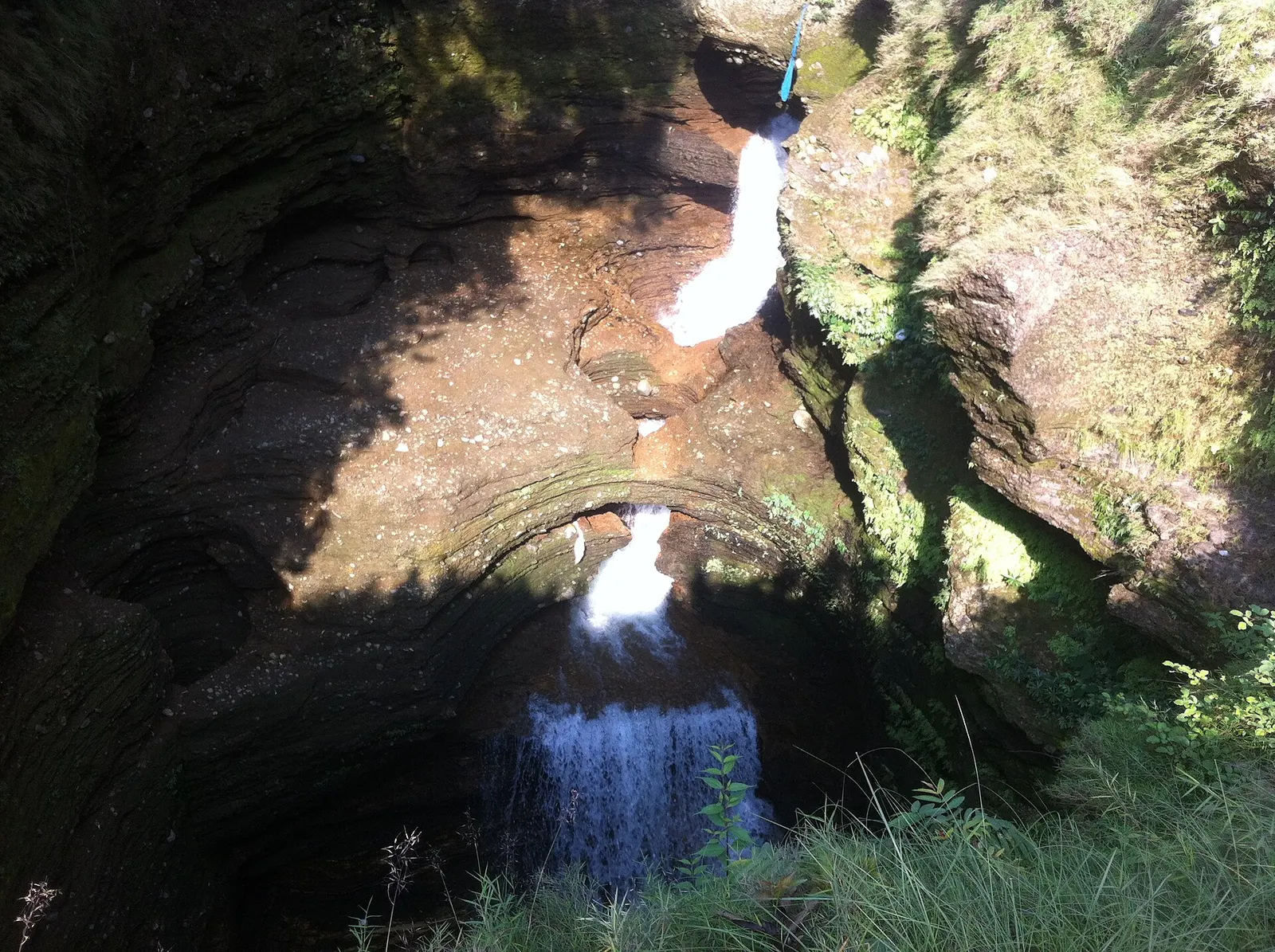
A waterfall in south Pokhara where the outflow of Phewa Tal drops into a narrow chasm and disappears underground.
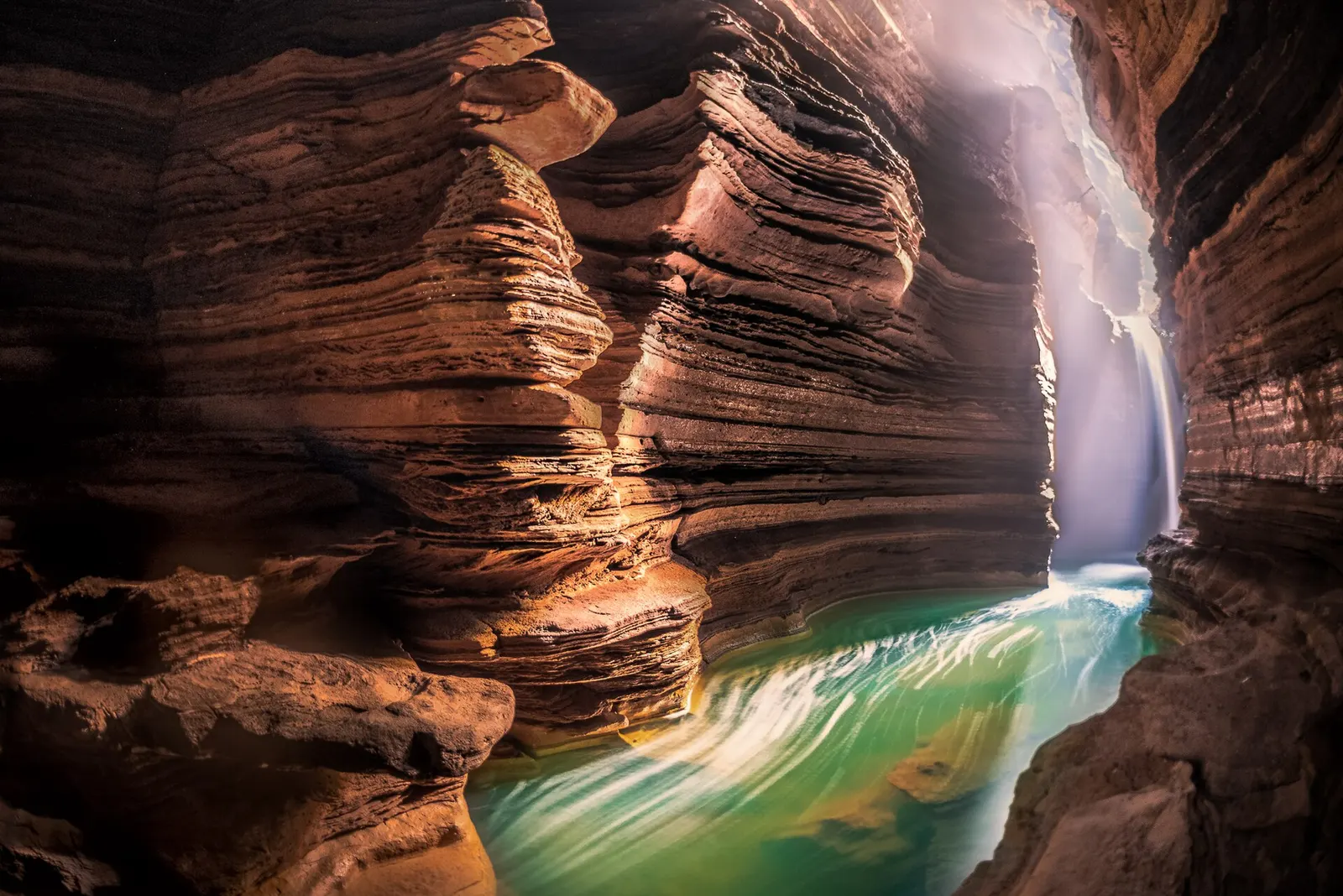
Temple, monastery or heritage site · 778 m
A Shiva cave shrine in south Pokhara, with a lower passage that ends behind the falling water of Davis Falls.
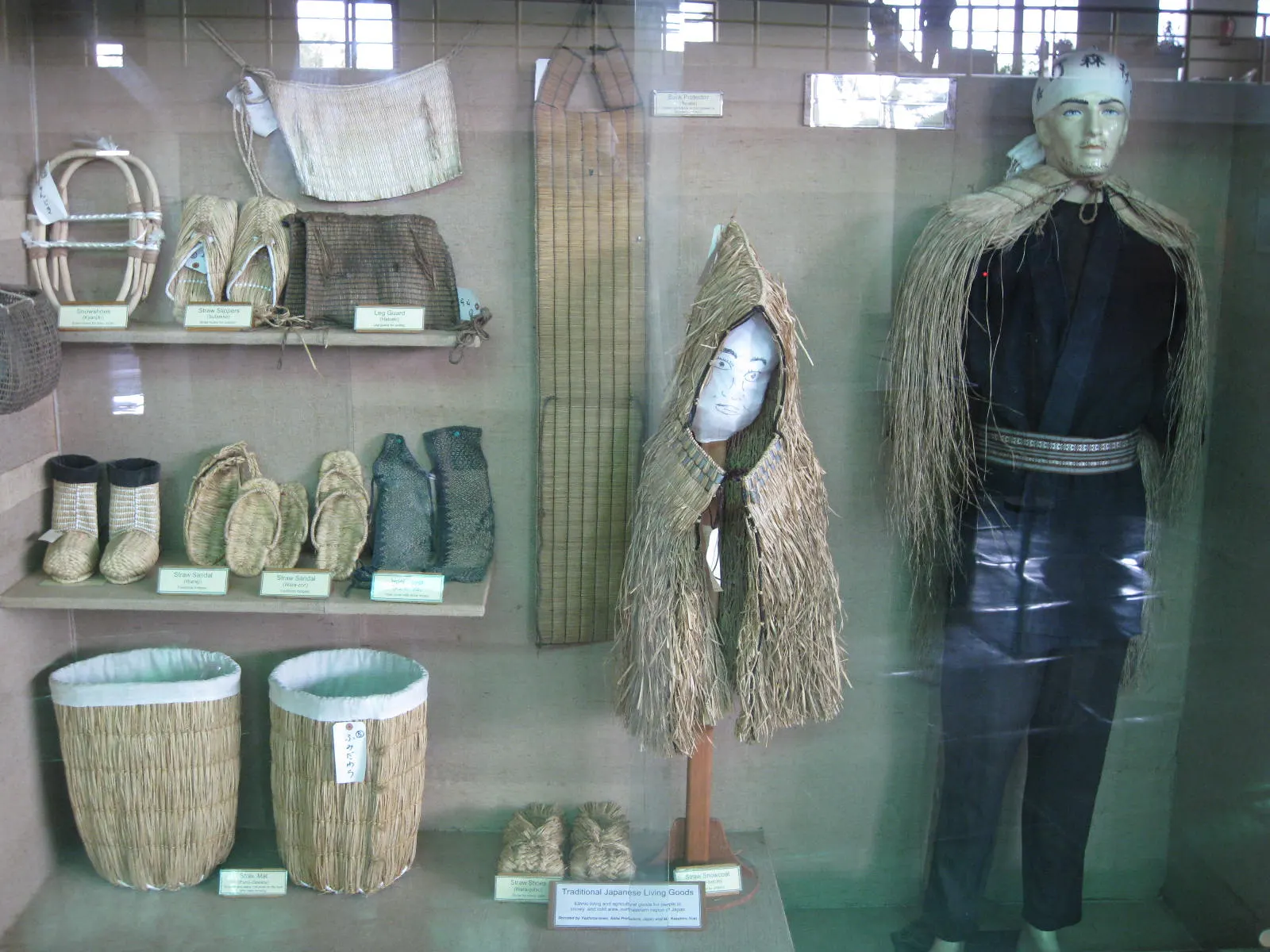
Temple, monastery or heritage site · 797 m
A museum in south Pokhara on the Himalaya's peaks, the people who climb them and the communities who live among them.
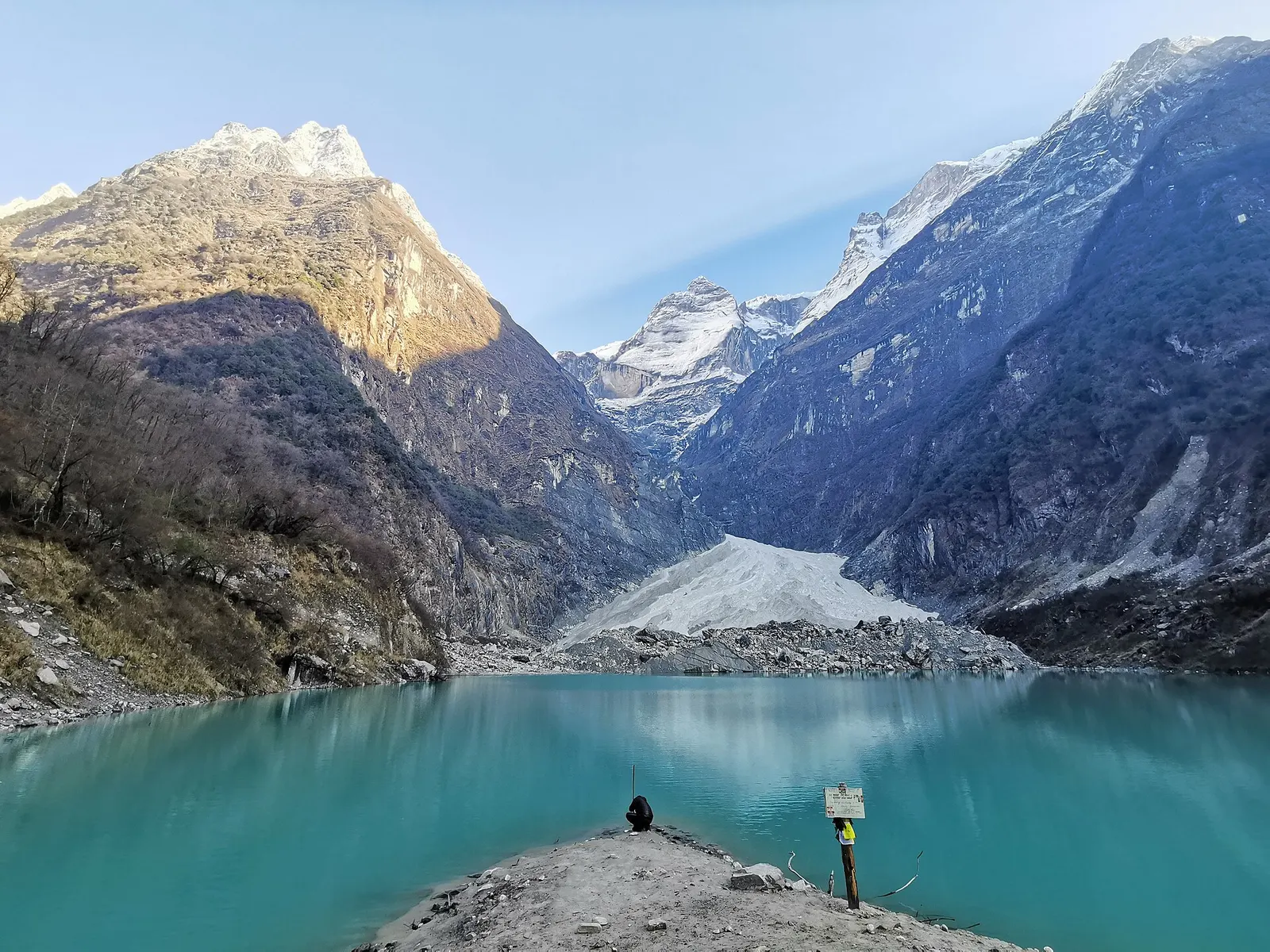
Lake · 2,546 m
A glacier lake at about 2,546 m beneath Annapurna II and Lamjung Himal, reached by a short trek from the Gurung village of Sikles.
Viewpoint · 2,517 m
A forested hill at about 2,500 m west of Phewa Tal, with a temple and pond on top and views of the Annapurna and Dhaulagiri ranges.
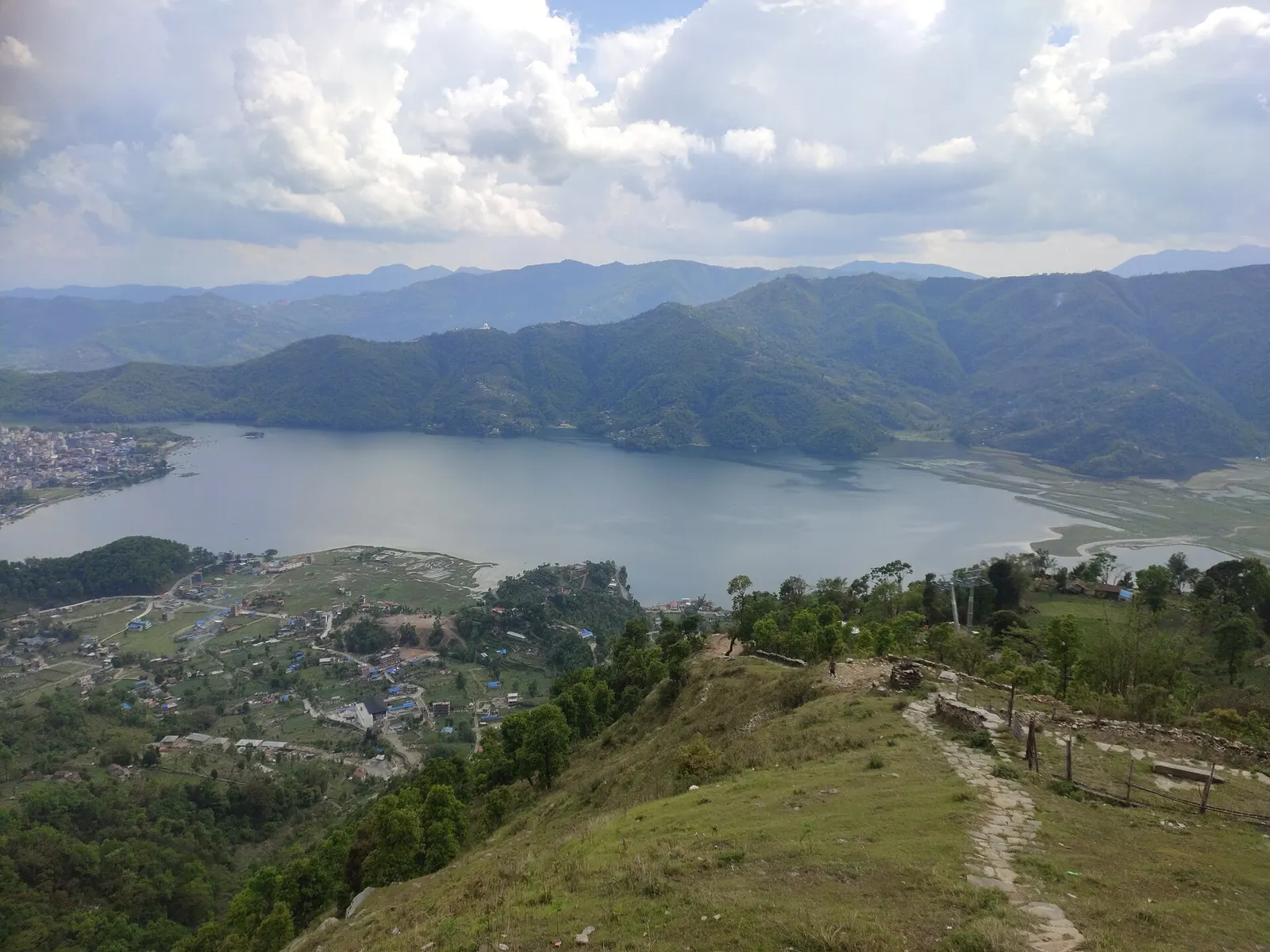
Lake · 742 m
Pokhara's main lake, with rowing boats, an island temple and Machhapuchhre reflected on still mornings.
Lake · 600 m
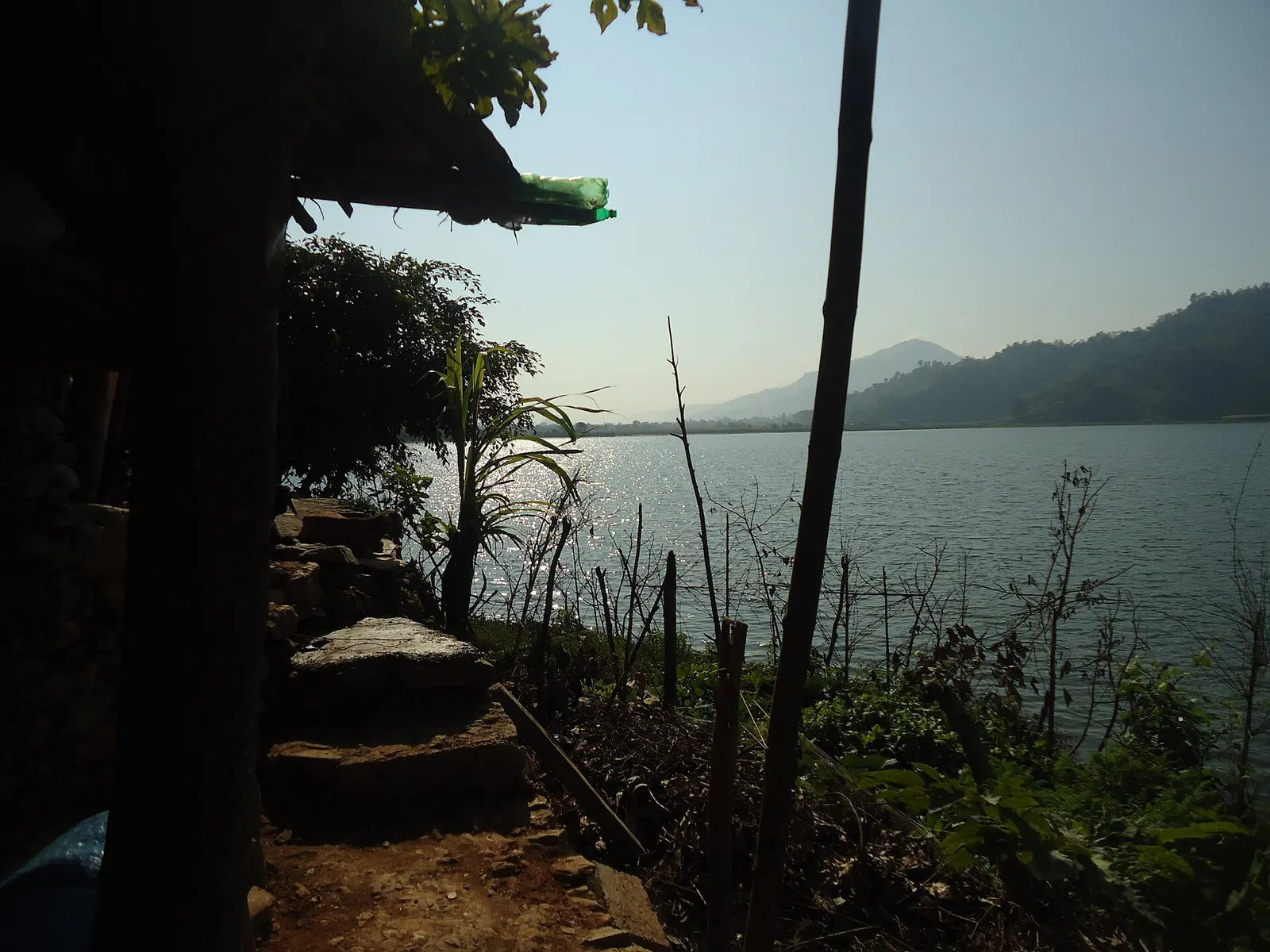
A small, shallow lake beside Begnas in the east of the Pokhara valley, managed by a local fisheries cooperative and rich in waterbirds.
Temple, monastery or heritage site · 150 m
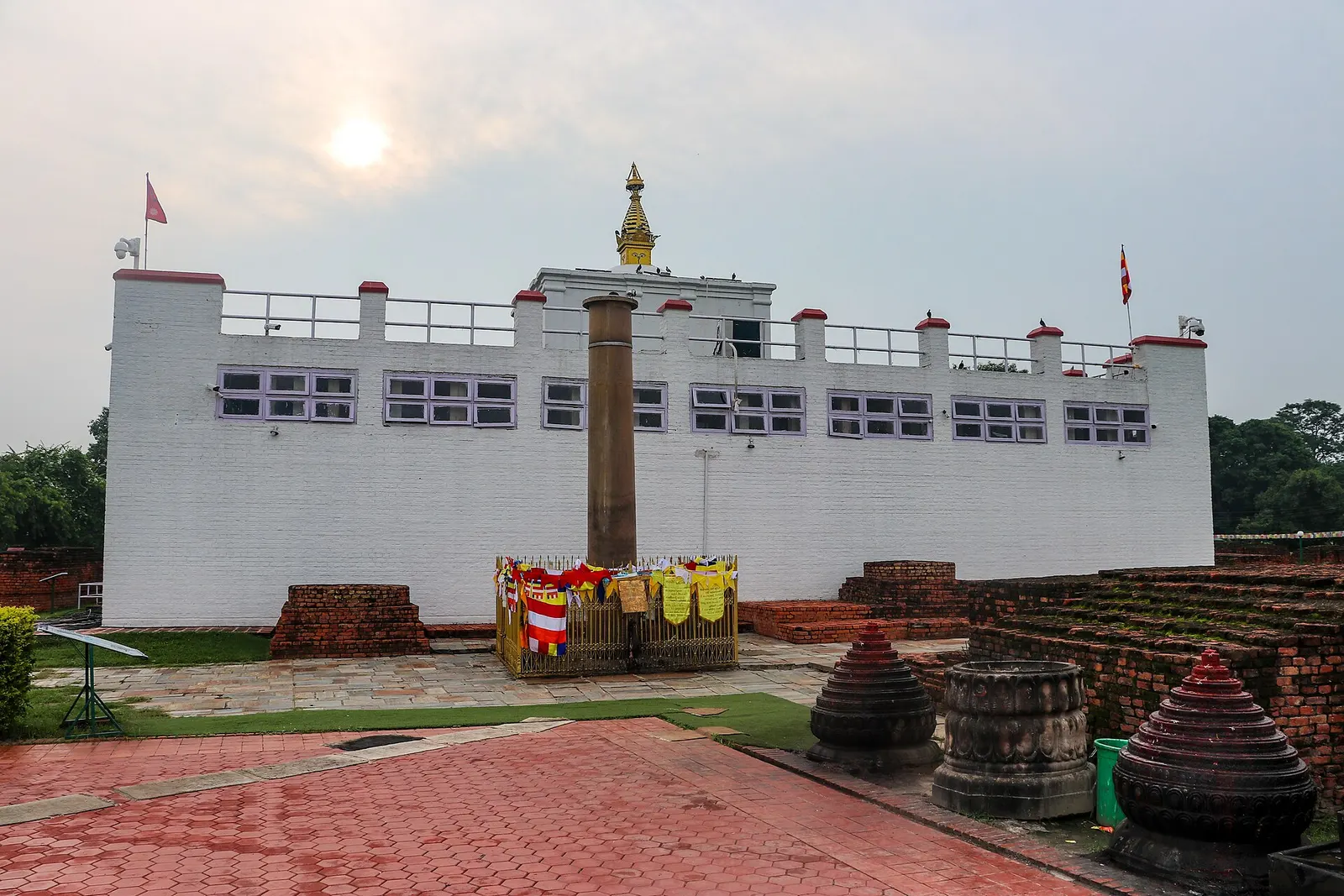
The birthplace of the Buddha in the Terai, a sacred garden with an Ashokan pillar, ringed by monasteries from across the Buddhist world.