Nepali phrases for travellers
Useful Nepali words and phrases for greetings, shopping, food and trekking, written in Devanagari with a simple romanisation and the meaning.
By Firfirey editorial. Editorial draft, facts being checked against official sources.
Why learn a few words
Nepali is the national language and the common language between Nepal's many communities, each of which may also speak its own mother tongue. English is widely understood in tourism, but a few words of Nepali are always welcomed, and on a trek they make lodge evenings much warmer.
Romanisation varies. The spellings below are a simple guide to pronunciation: 'chh' is a breathy ch, and 'a' is usually short, like the u in 'cup'.
Everyday essentials
Start with these:
| Nepali | Romanisation | Meaning |
|---|---|---|
| नमस्ते | Namaste | Hello, greetings (any time of day) |
| धन्यवाद | Dhanyabad | Thank you |
| हजुर | Hajur | Yes (polite), or 'pardon?' |
| होइन | Hoina | No, it isn't |
| ठिक छ | Thik chha | OK, fine |
| माफ गर्नुस् | Maaf garnus | Sorry, excuse me |
| बुझिनँ | Bujhina | I didn't understand |
| मेरो नाम ... हो | Mero naam ... ho | My name is ... |
| तपाईंलाई कस्तो छ? | Tapailai kasto chha? | How are you? |
| मलाई सन्चै छ | Malai sanchai chha | I'm well |
| फेरि भेटौंला | Pheri bhetaunla | See you again |
Shopping and getting around
Useful in markets, taxis and buses:
| Nepali | Romanisation | Meaning |
|---|---|---|
| कति हो? | Kati ho? | How much is it? |
| अलि सस्तो गर्नुस् | Ali sasto garnus | Please make it a little cheaper |
| ... कहाँ छ? | ... kaha chha? | Where is ...? |
| शौचालय कहाँ छ? | Shauchalaya kaha chha? | Where is the toilet? |
| यहाँ रोक्नुस् | Yaha roknus | Please stop here |
Food and drink
For teahouses and dal bhat restaurants:
| Nepali | Romanisation | Meaning |
|---|---|---|
| मीठो छ | Mitho chha | It's delicious |
| पानी | Paani | Water |
| उमालेको पानी | Umaaleko paani | Boiled water |
| पुग्यो | Pugyo | That's enough (no more refills, thank you) |
| अलिकति | Alikati | A little |
| पिरो नहाल्नुस् | Piro nahalnus | No chilli, please |
| चिया | Chiya | Tea |
On the trail
Words that help when walking and in an emergency:
| Nepali | Romanisation | Meaning |
|---|---|---|
| बिस्तारै | Bistarai | Slowly |
| बिस्तारै बिस्तारै | Bistarai bistarai | Slowly, slowly (a trekking motto) |
| मलाई टाउको दुख्यो | Malai tauko dukhyo | I have a headache |
| म थाकें | Ma thake | I'm tired |
| सहयोग गर्नुस् | Sahayog garnus | Please help |
Numbers
Useful for prices, room numbers and bus times. Nepali has its own numerals, which you will see on some signs and number plates:
| Numeral | Nepali | Romanisation | Meaning |
|---|---|---|---|
| १ | एक | Ek | One |
| २ | दुई | Dui | Two |
| ३ | तीन | Tin | Three |
| ४ | चार | Char | Four |
| ५ | पाँच | Panch | Five |
| १० | दश | Das | Ten |
| १०० | सय | Saya | Hundred |
| १००० | हजार | Hajar | Thousand |
Polite and informal speech
Nepali has several levels of politeness. The phrases on this page use the polite forms that suit strangers, shopkeepers and older people. With friends and children, Nepalis use more informal forms, but as a visitor you will never go wrong by staying polite.
Tapai (तपाईं) is the respectful word for 'you'. If you hear 'hajur' in reply to something you said, it may mean 'yes' or 'sorry, could you repeat that?', depending on the tone.
Addressing people
Nepalis often use family terms with strangers. Use dai (दाइ, older brother) and didi (दिदी, older sister) for people around your age or older, and bhai (भाइ, younger brother) and bahini (बहिनी, younger sister) for younger people. Adding 'ji' after a name, as in 'Ram ji', is respectful.
Questions
Is namaste used for goodbye as well?
Yes. Namaste works as both hello and goodbye, at any time of day.
How do I say 'thank you' in Nepali?
Dhanyabad (धन्यवाद). In everyday speech people often thank with a smile or a namaste instead.
How do I stop the dal bhat refills?
Say 'pugyo' (पुग्यो), meaning 'that's enough', or cover your plate with your hand.
Is Nepali the same as Hindi?
No. Both are written in Devanagari script and share some vocabulary, but Nepali is a separate language with its own grammar and everyday words. Using Nepali words in Nepal is always appreciated.
Sources
Related treks
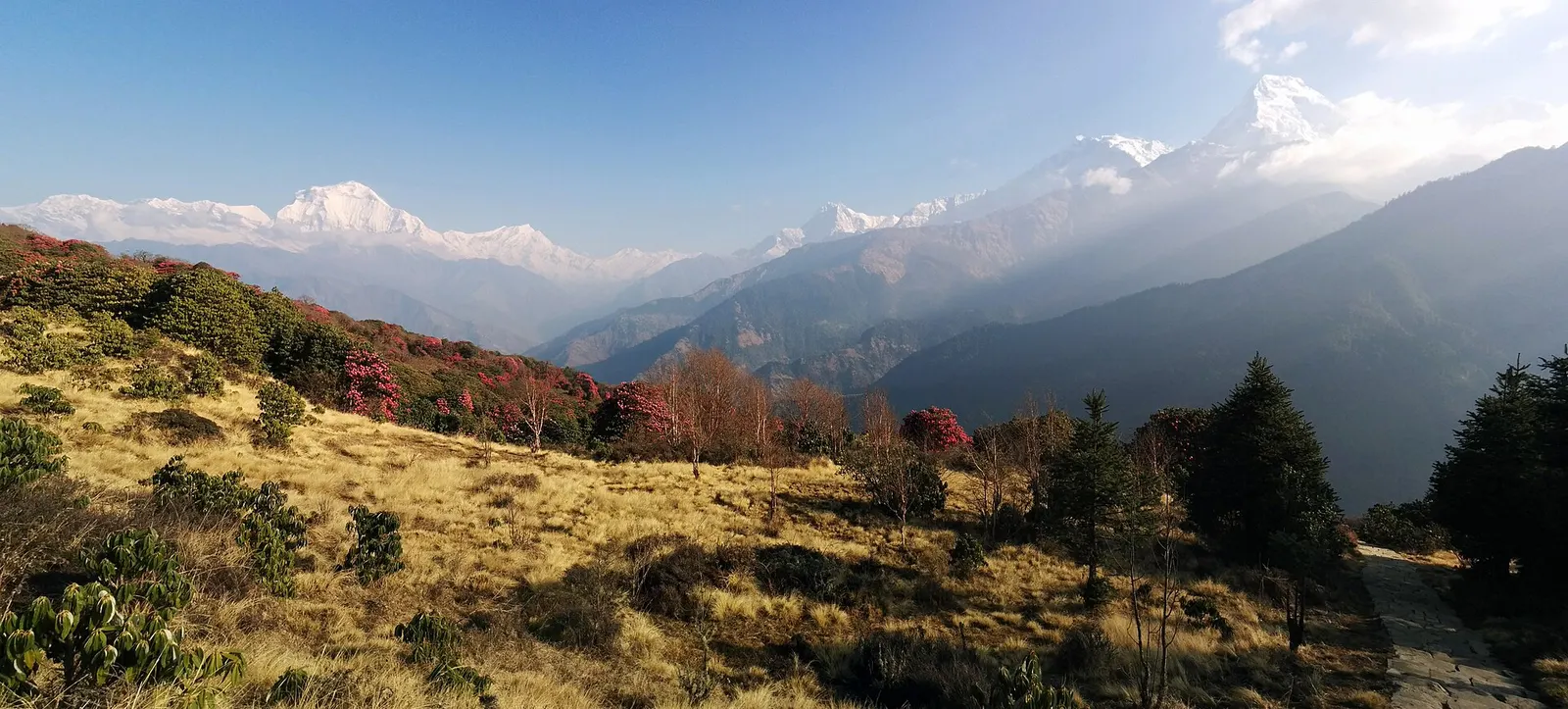
A short teahouse loop from Pokhara through Magar and Gurung villages and rhododendron forest to Ghorepani and the Poon Hill viewpoint (3,210 m), returning via Tadapani and Ghandruk.
- Days
- 4 days
- Maximum altitude
- 3,210 m
- Difficulty
- Easy
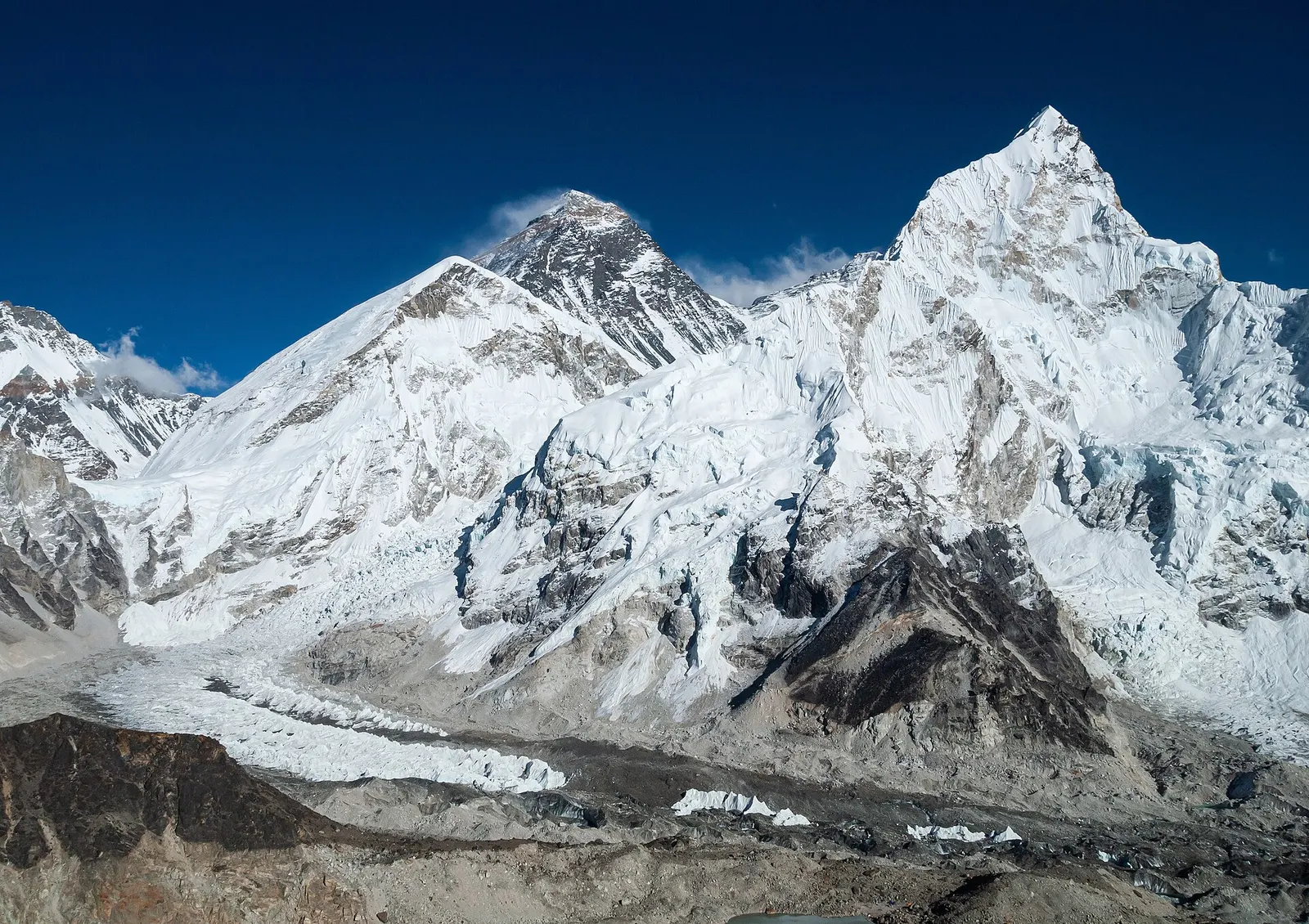
The classic teahouse trek from Lukla through Sherpa villages to Everest Base Camp (5,364 m) and the Kala Patthar viewpoint, with acclimatisation days in Namche and Dingboche.
- Days
- 12 days
- Maximum altitude
- 5,644 m
- Difficulty
- Strenuous