Town or village · 1,700 m
Sirubari
A Gurung hill village in Syangja that pioneered village homestay tourism in Nepal, with views of the Annapurnas and Dhaulagiri.
Pokhara & Annapurnaआलमदेवी मन्दिर
A forest shrine in Syangja sacred to Magar communities and linked in tradition to the ancestors of the Shah kings.
Alamdevi is a Hindu shrine in the hills of Syangja district, set in forest and dedicated to a goddess revered by local Magar communities. It is one of the best-known religious sites in the district and draws worshippers from Syangja and neighbouring districts, particularly during Dashain and on other important days in the Hindu calendar.
The site is simple compared with large city temples: a shrine area within a wooded hill, with stone steps, bells and spaces for offerings. Its atmosphere comes from the setting and the strong devotion of local people rather than from architecture. On clear days the surrounding ridges give views across the Syangja hills and, in good conditions, north towards the Annapurna and Dhaulagiri ranges.
For travellers, Alamdevi is a stop that fits with a stay at Sirubari, a night in Putalibazar, or a journey along the Siddhartha Highway between Pokhara and Palpa. It is a good place to see religious practices that combine mainstream Hindu worship with older local traditions.
Alamdevi is widely described as the family deity of the Shah dynasty, which traces its ancestry through the hill principalities of this region before Drabya Shah established the kingdom of Gorkha in the sixteenth century. Royal connections meant that the shrine received offerings from the palace in the past.
Magar priests have traditionally played a central role in worship at the shrine, reflecting the deep roots of Magar communities in Syangja. The blend of Magar custom and Hindu ritual seen here is typical of many shrines in the western hills. Dashain is the main festival, when sacrifices are offered and crowds gather.
Shrine visit
Visit the shrine and its forest setting, ideally in the morning when worshippers come.
Dashain
Come during Dashain to see the shrine at its busiest, accepting crowds and sacrifices.
Combine with Sirubari
Visit as part of a stay at Sirubari or a trip through Putalibazar.
Conditions change fast in the mountains.
Weather data: MET Norway, licensed CC BY 4.0. A forecast, not a guarantee.
Feb-Apr, Oct-Dec
Stay in Putalibazar or at a homestay in a nearby village such as Sirubari.
No partner stays are listed here yet. List a property.
Travel along the Siddhartha Highway to Syangja and continue by local road and foot to the shrine.
Nearest hub: Pokhara
None needed
No permit is needed to visit Alamdevi.
Verify before travel: permit rules and fees change. Checked 2026-10-08 against Nepal Tourism Board.
What this place is typically exposed to, and when. These are seasonal patterns, not a report on conditions now.
Landslidesmoderate in a typical yearJun-Sep
Rural roads and steps around the shrine become slippery and are affected by small landslides in the monsoon.
Otherlow in a typical yearSep-Oct
Dashain brings heavy crowds and busy transport; plan ahead.
Check current conditions before you travel
Roads, trails, passes and flights change with the weather and with roadworks, and nothing on this page describes conditions today. Before you set off, check the Department of Hydrology and Meteorology for weather and flood warnings, the Nepal Disaster Risk Reduction Portal for incidents, and the local authority, police or your licensed operator for road, trail and flight status.
In the hills of Syangja district, reached via the Siddhartha Highway and local roads.
It is sacred to Magar communities and is traditionally regarded as the family deity of the Shah kings.
No entry fee is normally charged.
Town or village · 1,700 m
A Gurung hill village in Syangja that pioneered village homestay tourism in Nepal, with views of the Annapurnas and Dhaulagiri.
Town or village
Syangja's district headquarters on the Siddhartha Highway, a base for Sirubari, Alamdevi and the southern Panchase hills.
Viewpoint · 2,517 m
A forested hill at about 2,500 m west of Phewa Tal, with a temple and pond on top and views of the Annapurna and Dhaulagiri ranges.
Town or village · 822 m
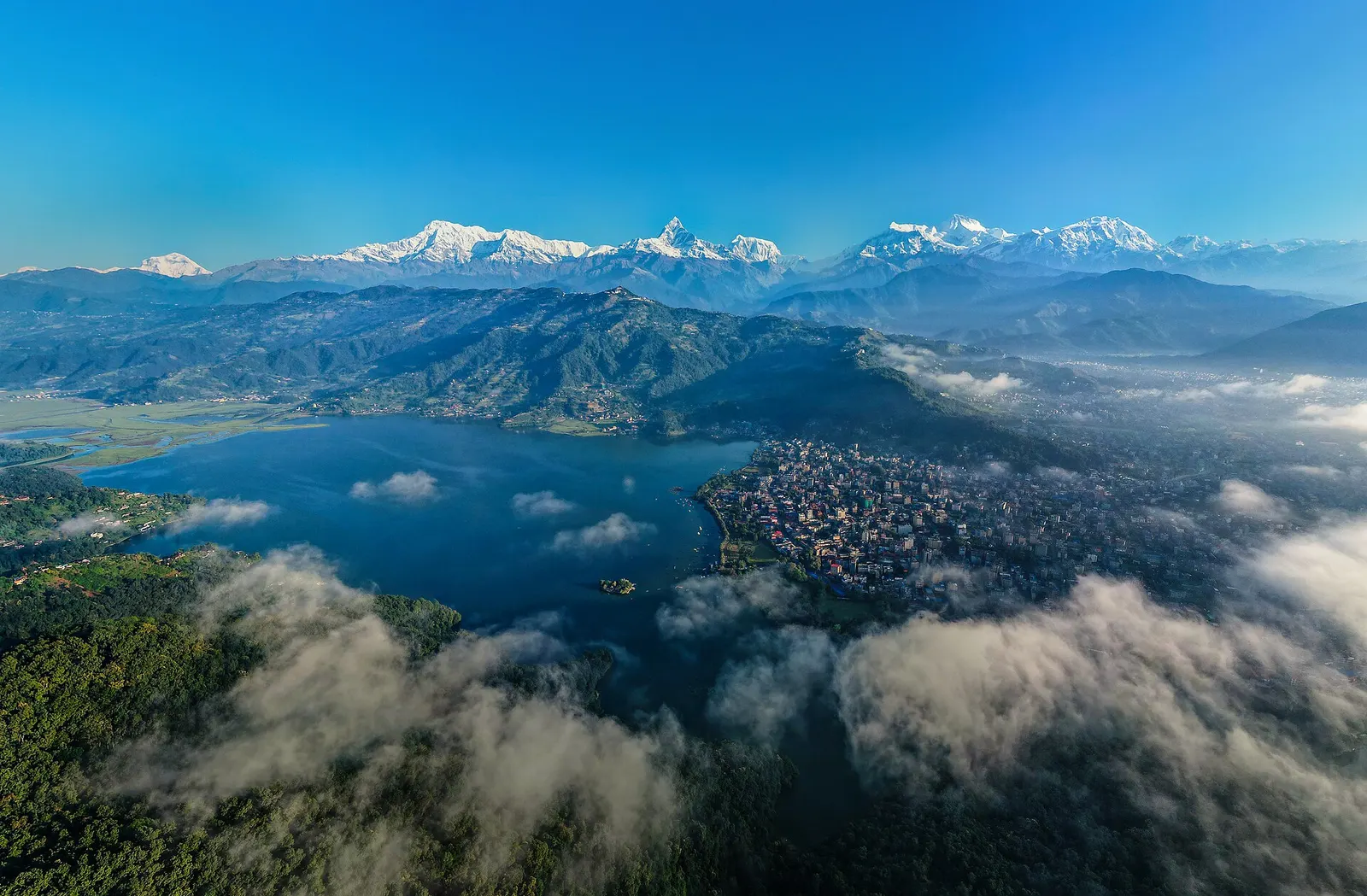
A lakeside city about 200 km west of Kathmandu, with the Annapurna range and Machhapuchhre rising close to the north.