National park or conservation area
Chitwan National Park
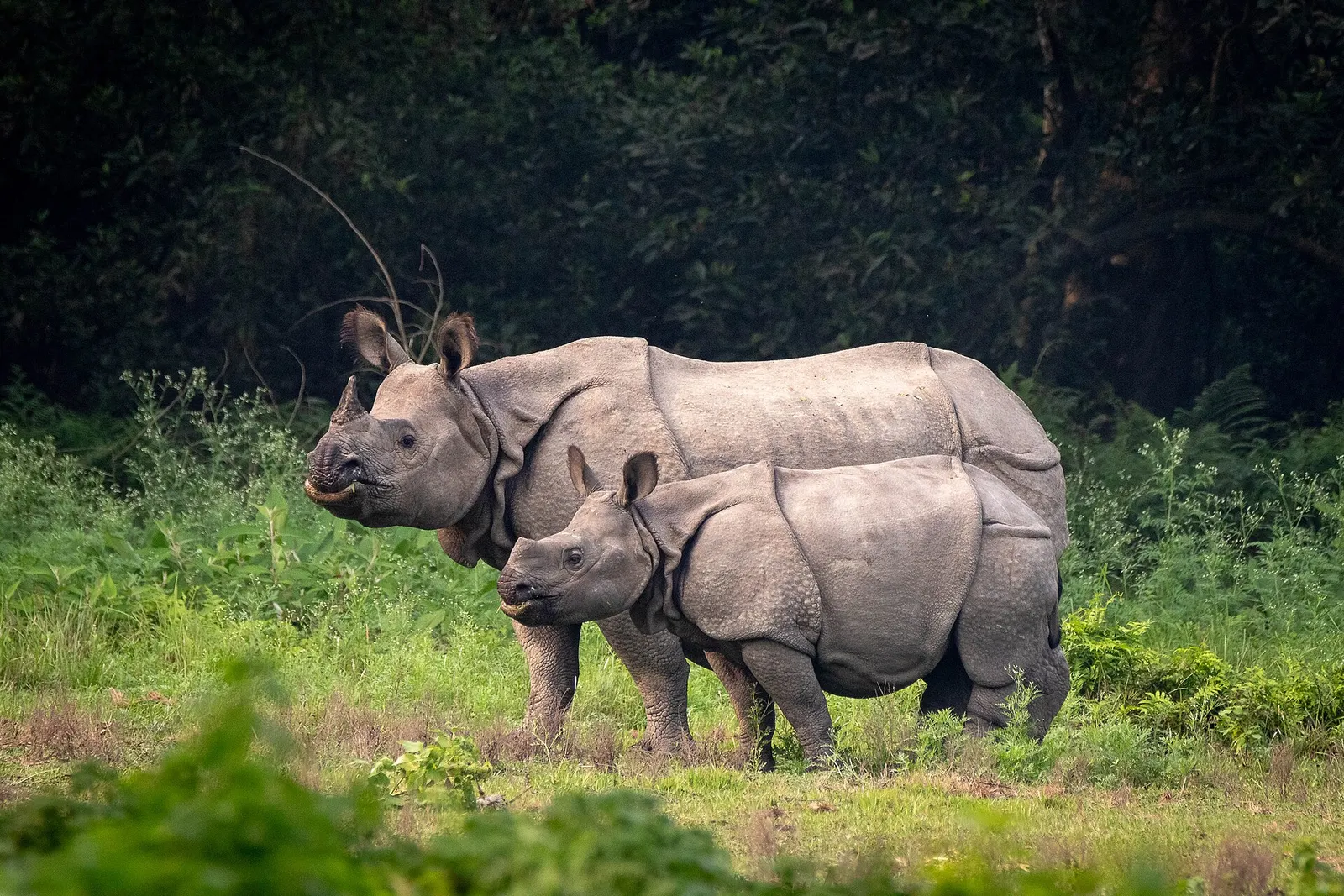
Nepal's first national park, in the inner Terai lowlands: sal forest, tall grassland and rivers home to one-horned rhinoceros, tigers and gharials.
Chitwan & Teraiपर्सा राष्ट्रिय निकुञ्ज
Sal forest and Chure hills east of Chitwan, protecting elephants, tigers and gaur in a much quieter setting.
Higher seasonal exposure: flooding (Jun-Sep).
Parsa National Park covers sal forest, riverine grassland and the dry Chure hills in the central Terai. It adjoins Chitwan National Park on its western side, and together they form one of the most important blocks of protected forest in Nepal. The park extends across parts of Parsa, Bara, Makwanpur and Chitwan districts.
Compared with Chitwan, Parsa receives few visitors and has little tourist infrastructure, which is part of its appeal for those interested in wildlife and forest. Wildlife includes wild Asian elephants, gaur, sambar and spotted deer, sloth bears and leopards, and the tiger population has grown with the wider recovery of tigers in the Terai. The birdlife is rich, with hornbills and many forest species.
The East-West Highway and the road to Hetauda run along the edge of the park, and the headquarters is near the highway at Adhabhar. Visits are usually arranged as jeep drives or guided walks with park staff or local guides, and the eastern part of the Chure hills here is dry and steep, cut by seasonal streams.
The area was protected as Parsa Wildlife Reserve in 1984, largely to conserve the habitat of wild elephants and gaur. It was later extended and upgraded to a national park in 2017.
Communities in the buffer zone, many of them Tharu, Madhesi and hill settlers, depend on the forest for fodder and firewood, and buffer zone programmes share part of park revenue with local villages. Human-wildlife conflict, especially with elephants, remains a concern for farmers living near the boundary.
The forest corridor between Parsa and Chitwan, and onward to protected areas across the border in India, is important for the movement of tigers and elephants in the wider Terai Arc landscape.
Jeep drive
Arrange a jeep drive on park roads through sal forest and along stream beds, with a licensed guide.
Birdwatching
Walk forest edges and buffer zone areas early in the morning for hornbills and other forest birds.
Combine with Chitwan
Visit Parsa as a quieter extension to a stay in Chitwan.
Conditions change fast in the mountains.
Weather data: MET Norway, licensed CC BY 4.0. A forecast, not a guarantee.
Oct-Apr
Few lodges near the park; most visitors stay in Birgunj, Simara or Hetauda, or arrange homestays in buffer zone villages.
No partner stays are listed here yet. List a property.
The park headquarters lies near the highway between Hetauda and Birgunj; Simara airport is close by.
Nearest hub: Birgunj
Entry fee
An entry fee is charged by the park, collected at the headquarters; check current rates and any activity fees with the park office.
Verify before travel: permit rules and fees change. Checked 2026-10-08 against Department of National Parks and Wildlife Conservation.
What this place is typically exposed to, and when. These are seasonal patterns, not a report on conditions now.
Floodinghigh in a typical yearJun-Sep
Monsoon rain between June and September swells streams draining the Chure hills and makes forest tracks impassable.
Heatmoderate in a typical yearApr-Jun
April to June is very hot in the Terai forest; plan activities for early morning and late afternoon.
Othermoderate in a typical yearAll year
Wild elephants, tigers, leopards and sloth bears live in and around the park; walk only with a licensed guide and follow park rules.
Check current conditions before you travel
Roads, trails, passes and flights change with the weather and with roadworks, and nothing on this page describes conditions today. Before you set off, check the Department of Hydrology and Meteorology for weather and flood warnings, the Nepal Disaster Risk Reduction Portal for incidents, and the local authority, police or your licensed operator for road, trail and flight status.
No, it is a separate park, but it adjoins Chitwan National Park to the west and the two form one connected forest area.
Wild elephants, gaur, tigers, leopards, sloth bears, deer and many forest birds.
Yes, an entry fee is charged by the park; check rates at the headquarters.
October to April, with late winter and spring usually best for wildlife.
Near the highway at Adhabhar, between Hetauda and Birgunj.
National park or conservation area
Nepal's first national park, in the inner Terai lowlands: sal forest, tall grassland and rivers home to one-horned rhinoceros, tigers and gharials.
Town or village · 85 m
Nepal's main trade gateway with India, a busy border city opposite Raxaul and a base for Parsa National Park.
Town or village · 100 m
The district headquarters of Bara, a busy Terai market town and a base for Gadhimai Temple and Simraungadh.
Temple, monastery or heritage site · 85 m
Birgunj's best-known goddess temple, crowded with worshippers during Dashain and other festivals.