

Viewpoint · 2,030 m
Kakani
A quiet hill station just outside the Kathmandu Valley in Nuwakot, with Himalayan views, strawberry farms and memorial parks.
Kathmandu Valleyनुवाकोट
A hilltop fort town above the Trishuli valley, where Prithvi Narayan Shah built a seven-storey palace during the unification of Nepal.
This is the historic fort town and palace complex of Nuwakot above Bidur, not the whole Nuwakot District.
Higher seasonal exposure: landslides (Jun-Sep), road blockages (Jun-Sep).
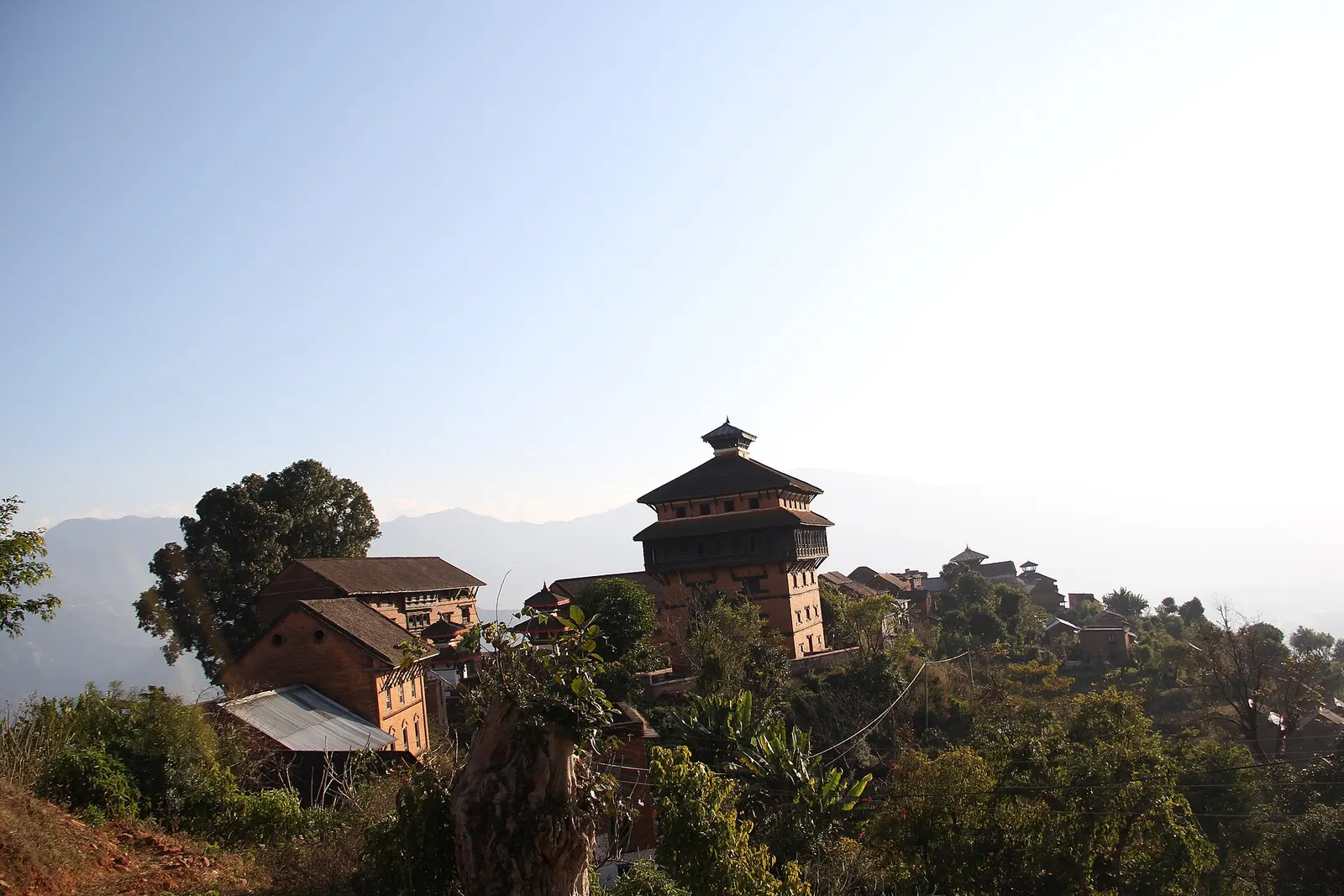
Nuwakot is a small historic town on a ridge above Bidur, the headquarters of Nuwakot District, about 70-80 km north-west of Kathmandu by road. The town grew around a fortified palace complex that overlooks the confluence area of the Trishuli and Tadi rivers, a strategic point on the old trade route between the Kathmandu Valley and Tibet.
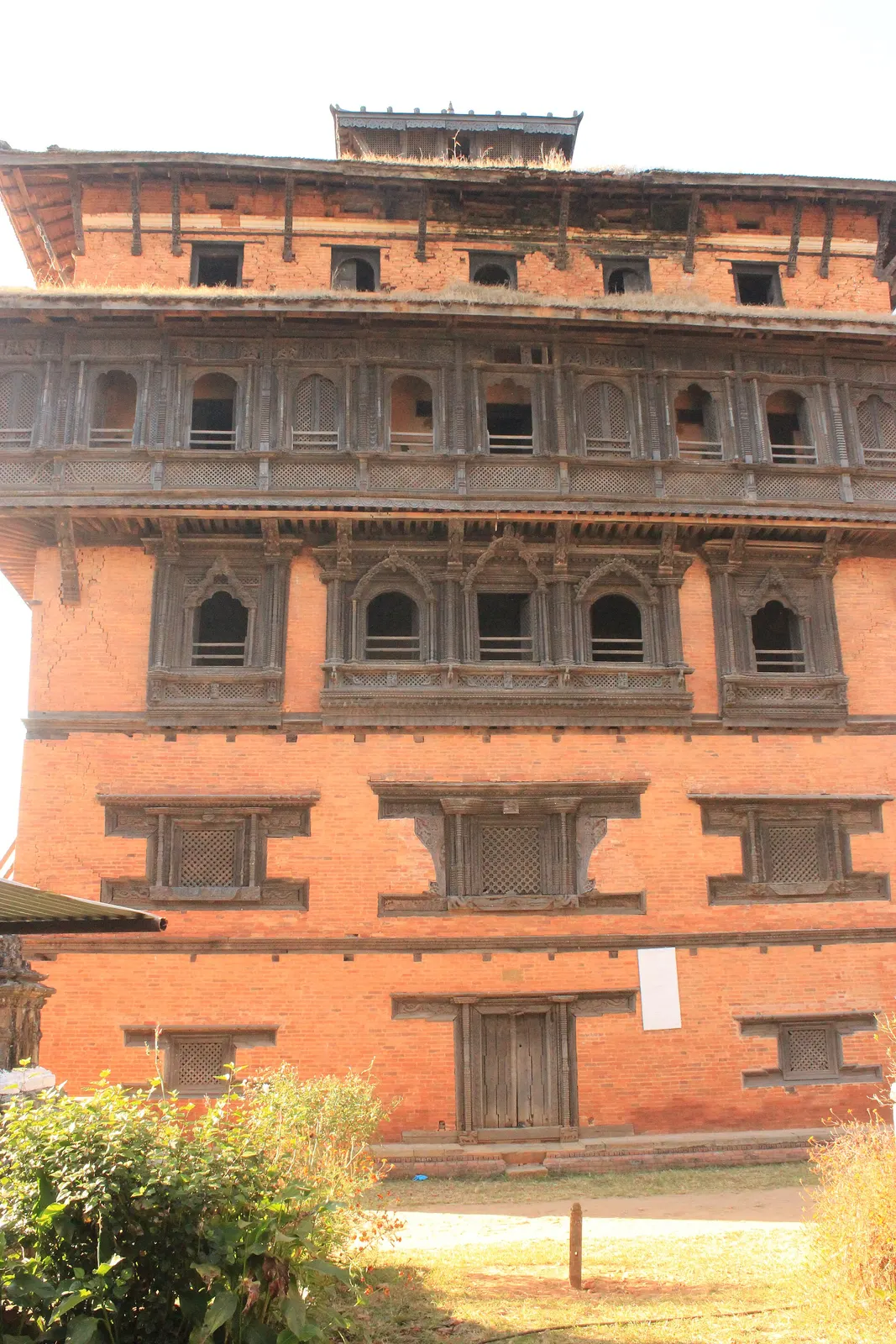
The main sight is the Nuwakot Durbar, known locally as the Saat Talle Durbar for its seven-storey brick and timber tower, with carved windows and thick fortress walls. Around it stand the Ranga Mahal theatre hall, the guard house, temples to Bhairavi, Taleju and Narayan, and a Buddhist stupa. The complex was badly damaged in the April 2015 earthquake and has been under restoration since; parts may be scaffolded or closed.
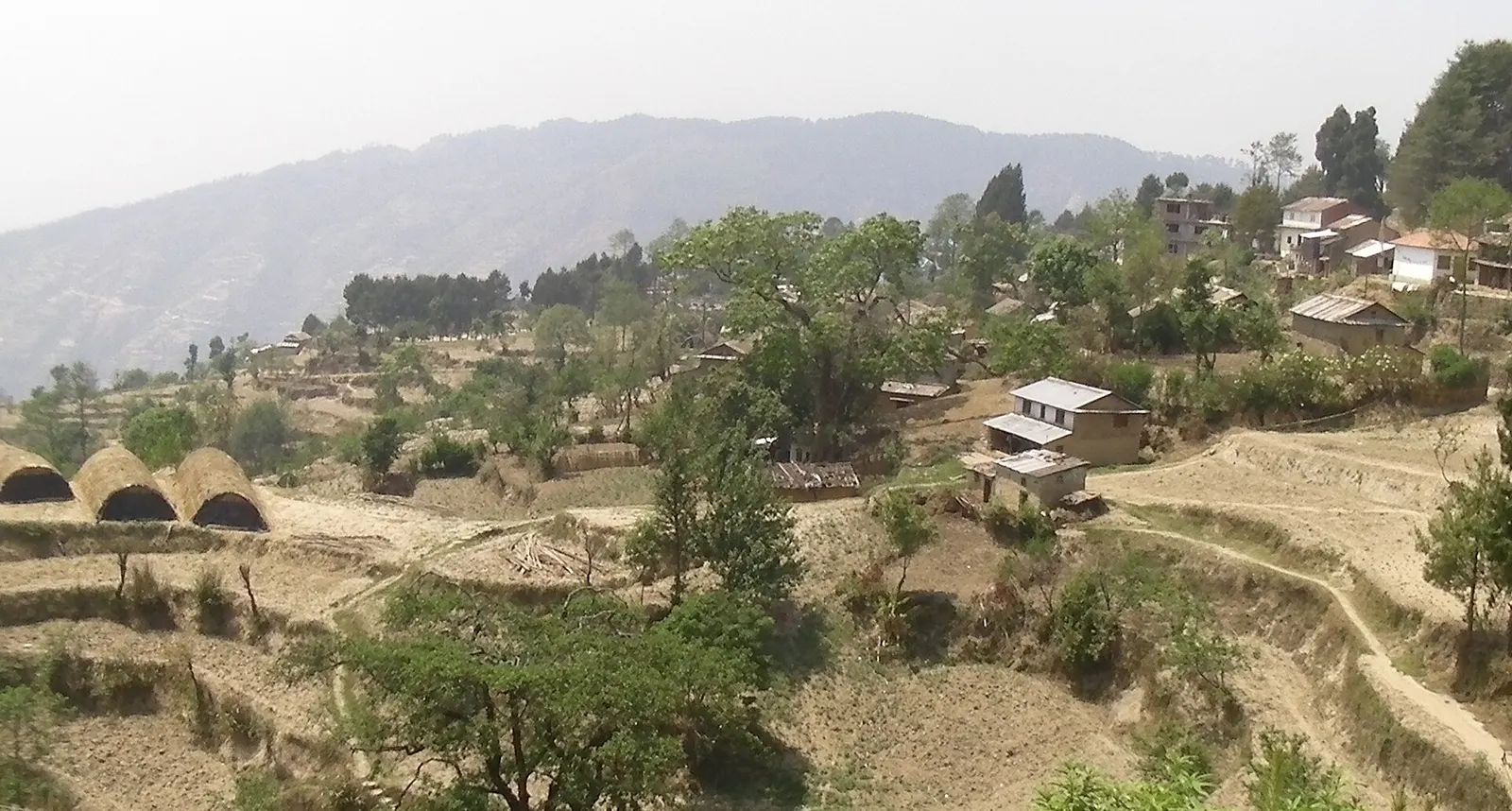
Beyond the monuments, Nuwakot is a pleasant overnight stop: a quiet bazaar of old houses, ridge-top walks with views over terraced valleys and, on clear days, the Ganesh and Langtang ranges to the north. It works as a cultural detour on the way to the Langtang region.
Nuwakot was a fortified outpost of the Malla kings of the Kathmandu Valley, and the Taleju temple on the hill above the palace reflects that Malla link. In 1744 Prithvi Narayan Shah of Gorkha captured Nuwakot, his first major step towards conquering the valley, and moved his base here from Gorkha. He built the present seven-storey palace, using craftsmen from Lalitpur, and he died at Nuwakot in 1775.
The palace floors had separate uses: courtiers and guards below, audience and prayer rooms above, royal living quarters, and upper floors once used to hold prisoners of war. Later Shah kings used the palace as a winter residence. The Nuwakot palace complex has been on Nepal's UNESCO Tentative List since 2008, which is not World Heritage status. The Bhairavi temple's festival, with a large procession, is the main local celebration.
Tour the palace complex
Walk around the Saat Talle Durbar, Ranga Mahal and museum rooms; check which parts are open while restoration continues.
Climb to the Taleju temple
Walk about 150 m up the hill from the palace for the five-tiered Malla-era temple and wide views.
Ridge walk
Follow village paths along the ridge for valley and mountain views in the early morning.
Forecast for 963 m. Conditions change fast in the mountains.
Weather data: MET Norway, licensed CC BY 4.0. A forecast, not a guarantee.
Oct-Mar
Homestays and a few small heritage-style resorts are in and around Nuwakot; more hotels are in Bidur below.
No partner stays are listed here yet. List a property.
Drive north-west from Kathmandu via Kakani and Ranipauwa to Bidur (Trishuli Bazaar), then climb the side road to Nuwakot.
Nearest hub: Kathmandu
Nearest hub: Kathmandu. Times are typical ranges, not schedules, and vary with roadworks, weather and the season.
By busfrom Kathmanduabout 2.5-4 hLocal buses
Buses run north-west via Kakani and Ranipauwa to Bidur, also called Trishuli Bazaar, about 65 to 75 km; from there a local jeep or a 20 to 30 minute drive climbs to Nuwakot bazaar.
When to set off: take a morning bus; services to Bidur thin out in the afternoon
By car or jeepfrom Kathmanduabout 2.75-4.5 h
Kathmandu to Bidur takes 2.5 to 4 hours, then 6 to 7 km of hill road to Nuwakot bazaar, about 20 to 30 minutes by car or jeep.
Road: Sealed highway with rough, repaired and monsoon-damaged sections through the Trishuli valley, then a narrow hill road up to the bazaar.
By motorbikefrom Kathmanduabout 2.5-4 hModerate riding
A long hill ride with broken surfaces and freight on the climb; riders usually make it a day trip in the dry season.
Road: Sealed but rough and patchy through the Trishuli valley, with loose repaired sections.
On footfrom Bidur (Trishuli Bazaar)about 1.5-2 h1.5-2 h up from Bidur, roughly 400 m of ascent
A direct climb up from the valley floor at Bidur to the ridge and the old palace.
Entry fee
A ticket is generally charged for the palace complex; amounts differ for Nepali, SAARC and other foreign visitors. Check the latest fee on arrival.
Verify before travel: permit rules and fees change. Checked 2026-10-06 against Nuwakot Palace (Wikipedia).
What this place is typically exposed to, and when. These are seasonal patterns, not a report on conditions now.
Landslideshigh in a typical yearJun-Sep
The road north-west through the Trishuli valley is among the most slide-prone approaches to the valley: the August 2026 Trishuli flood and debris flow damaged the corridor and its highway links, and every monsoon brings slips between June and September.
Road blockageshigh in a typical yearJun-Sep
Monsoon slips and flood damage typically block or narrow the Trishuli corridor and the Prithvi Highway links, so travel days here are unpredictable in July and August.
Floodingmoderate in a typical yearJun-Sep
Bidur and the valley floor below the hill sit on the Trishuli, which runs very high between June and September; the 2026 flood struck Betrawati, Trishuli and Devighat downstream.
Coldlow in a typical yearDec-Feb
The hill bazaar at about 960 m is mild by day in December to February, but the Trishuli valley below fills with fog in the early morning and nights are cool.
Heatlow in a typical yearApr-Jun
The Trishuli valley below Nuwakot is low and sheltered, so April to early June afternoons are hot and hazy; the hill bazaar itself stays a little cooler.
Check current conditions before you travel
Roads, trails, passes and flights change with the weather and with roadworks, and nothing on this page describes conditions today. Before you set off, check the Department of Hydrology and Meteorology for weather and flood warnings, the Nepal Disaster Risk Reduction Portal for incidents, and the local authority, police or your licensed operator for road, trail and flight status.
Drive about 2.5-4 hours via Kakani to Bidur, then take the 6-7 km hill road up to Nuwakot.
Prithvi Narayan Shah built the seven-storey palace after capturing Nuwakot in 1744, during the unification of Nepal.
No. The palace complex has been on Nepal's UNESCO Tentative List since 2008, which is a separate list from World Heritage Sites.
Yes, the palace complex was badly damaged and restoration has been continuing since; some areas may be closed.
Viewpoint · 2,030 m
A quiet hill station just outside the Kathmandu Valley in Nuwakot, with Himalayan views, strawberry farms and memorial parks.
Valley or region
The trekking region closest to Kathmandu: glacier valleys, holy lakes and Hyolmo villages across Rasuwa, Nuwakot and Sindhupalchok.
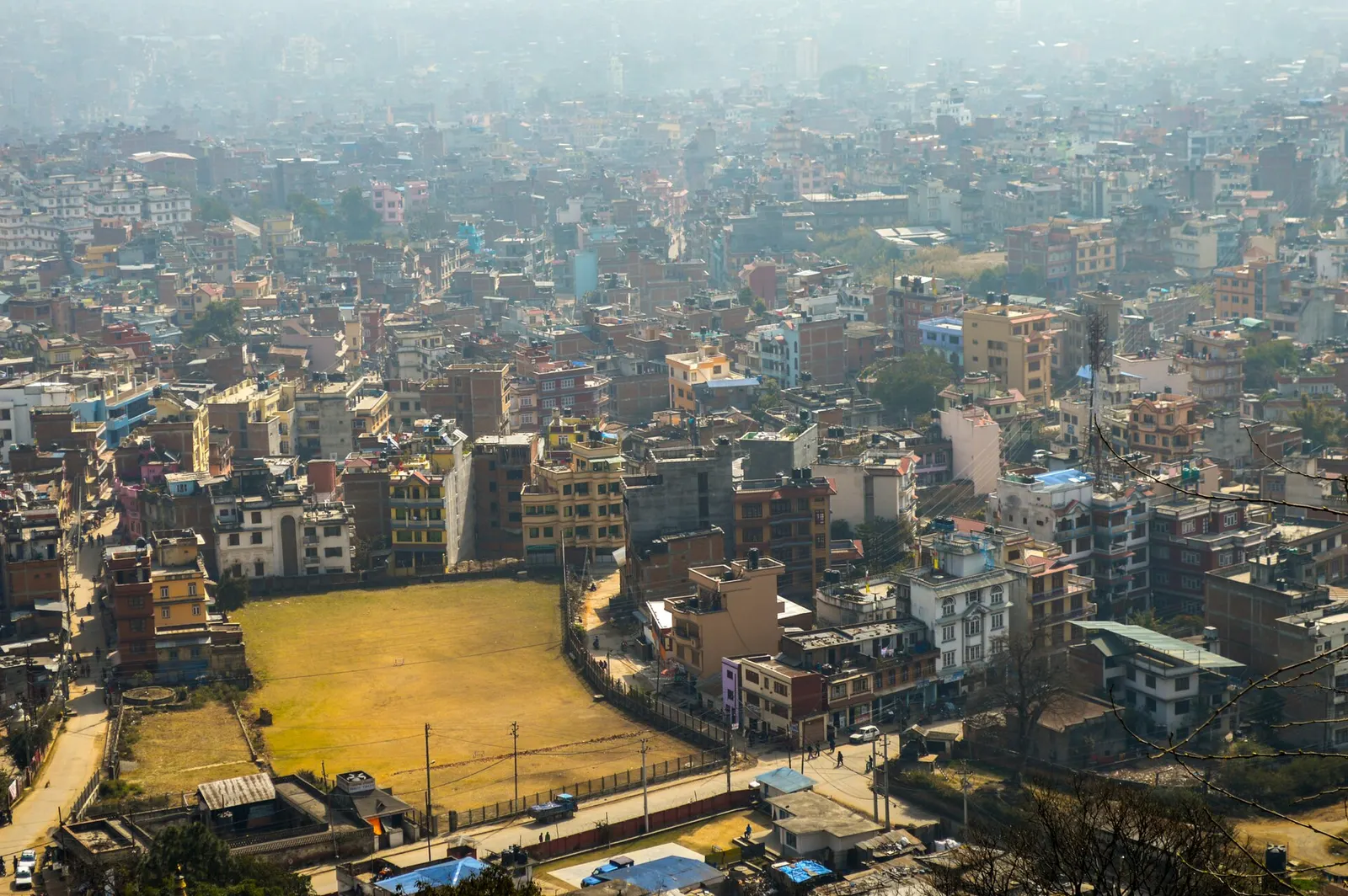
Town or village · 1,400 m
Nepal's capital, a sprawling valley city wrapped around a medieval Newar core, with major Hindu and Buddhist sites and the country's main airport.
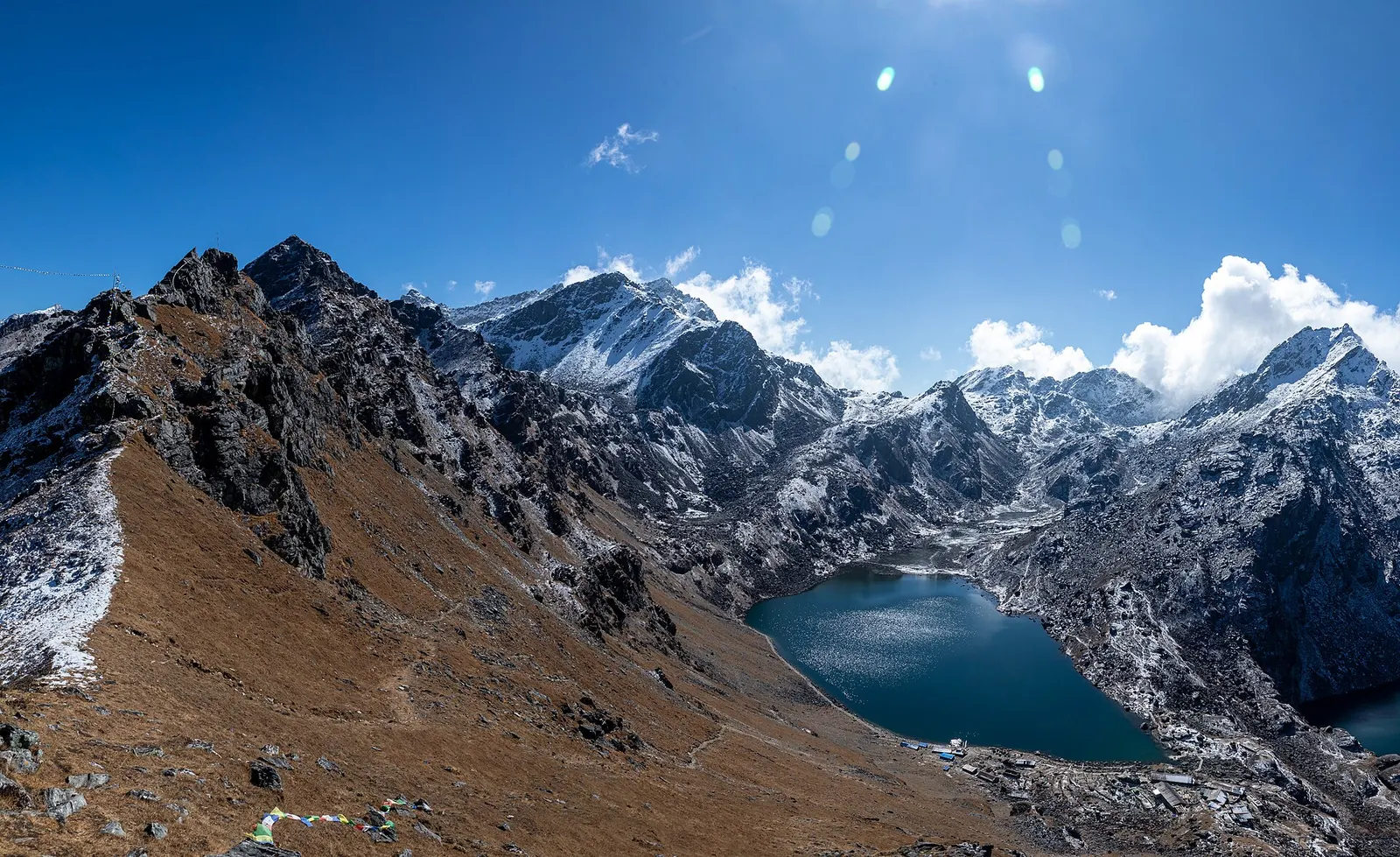
Lake · 4,380 m
A sacred alpine lake at about 4,380 m in Langtang National Park, a Hindu and Buddhist pilgrimage site and a high point between Langtang and Helambu.