National park or conservation area
Chitwan National Park
Nepal's first national park, in the inner Terai lowlands: sal forest, tall grassland and rivers home to one-horned rhinoceros, tigers and gharials.
Chitwan & Teraiअमलटारी
A Tharu and Bote village on the western edge of Chitwan National Park, known for its community homestays and riverside wildlife.
This is the village with community homestays on the Nawalpur side of Chitwan National Park, west of the Narayani.
Amaltari is a village in Kawasoti municipality of Nawalpur district, on the west bank of the Narayani where the farmland meets the forests of Chitwan National Park. It is known for its community homestay programme, run by local Tharu and Bote households in the buffer zone of the park, which offers a quieter alternative to the hotel strip at Sauraha on the other side of the park.
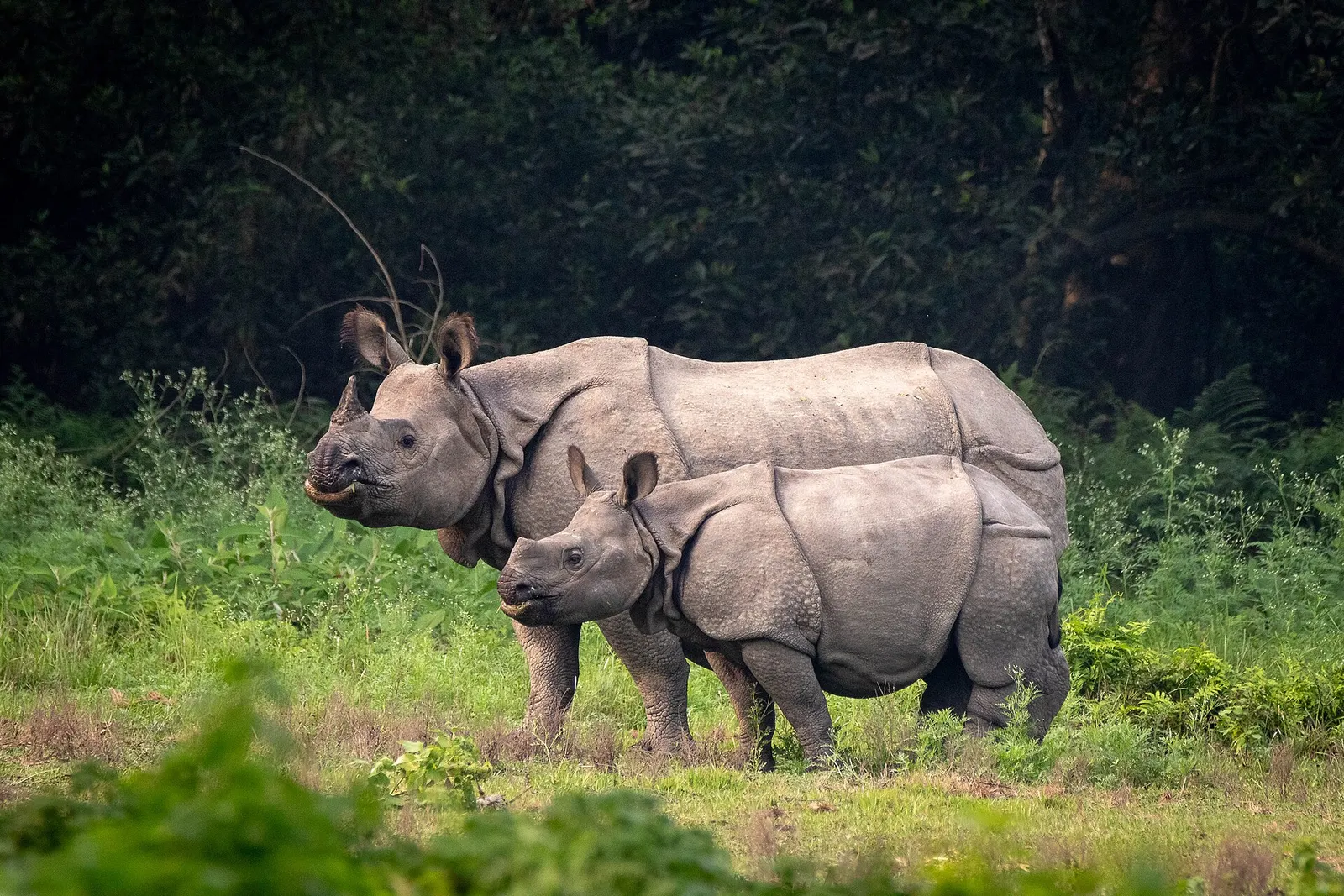
From Amaltari, visitors can take guided walks, jeep safaris and canoe trips into the western part of Chitwan National Park, where the grasslands and sal forest hold one-horned rhinoceros, several species of deer, wild elephants and, rarely seen, tigers. The Narayani here is home to gharial and mugger crocodiles and to river dolphins in some stretches, and the wetlands attract large numbers of birds, particularly in winter.
A stay usually combines wildlife activities with time in the village itself: meals of Tharu food, evening dances by the homestay group, and walks through fields and mud-walled houses. The atmosphere is rural and slow, and the experience suits travellers who want to see the park through the eyes of the communities that live beside it.
The Tharu are among the oldest inhabitants of the Terai, with their own language, architecture and festivals, while the Bote are traditionally a river people, associated with fishing and ferrying on the Narayani. Both communities had to adapt when the national park was established and access to its forests and rivers was restricted.
Buffer-zone programmes and community homestays developed to give local households a share of tourism income and an interest in conservation. Amaltari's homestays are organised collectively, with visitors allocated to houses by the committee and earnings supporting community projects.
Park safari
Join a guided jeep or walking safari into the western sector of Chitwan National Park.
River trip
Take a canoe trip on the Narayani to look for gharial, crocodiles and birds.
Village life
Walk through the village and fields, and join the evening Tharu cultural programme.
Conditions change fast in the mountains.
Weather data: MET Norway, licensed CC BY 4.0. A forecast, not a guarantee.
Oct-Mar
Community-run homestays in village houses, allocated through the local homestay committee.
No partner stays are listed here yet. List a property.
Travel along the Mahendra Highway to Kawasoti or Danda in Nawalpur and continue south by local road to Amaltari.
Nearest hub: Bharatpur
Entry fee
The village needs no permit, but entering Chitwan National Park for safaris requires a park entry permit, normally arranged through the homestay or a guide.
Verify before travel: permit rules and fees change. Checked 2026-10-08 against Department of National Parks and Wildlife Conservation.
What this place is typically exposed to, and when. These are seasonal patterns, not a report on conditions now.
Heatmoderate in a typical yearApr-Jun
April to June brings intense lowland heat; plan safaris for early morning and late afternoon.
Floodingmoderate in a typical yearJul-Sep
Monsoon rains flood the Narayani and low-lying roads, and park activities are limited in the wet season.
Check current conditions before you travel
Roads, trails, passes and flights change with the weather and with roadworks, and nothing on this page describes conditions today. Before you set off, check the Department of Hydrology and Meteorology for weather and flood warnings, the Nepal Disaster Risk Reduction Portal for incidents, and the local authority, police or your licensed operator for road, trail and flight status.
In Kawasoti municipality, Nawalpur district, on the western edge of Chitwan National Park west of the Narayani.
Rhinos are regularly seen on safaris in the park's western sector, though sightings are never guaranteed.
It is smaller and quieter, with community homestays instead of hotels, and access to the less visited western part of the park.
A Chitwan National Park entry permit is needed for activities inside the park.
National park or conservation area
Nepal's first national park, in the inner Terai lowlands: sal forest, tall grassland and rivers home to one-horned rhinoceros, tigers and gharials.
Temple, monastery or heritage site
A hilltop Kalika temple above Gaindakot with a long stairway and wide views over the Narayani and Chitwan.
Temple, monastery or heritage site
A modern temple and spiritual complex beside the East-West Highway in Nawalpur, with gardens, shrines and a museum.
Temple, monastery or heritage site
A sacred confluence of the Kali Gandaki and Trishuli near Narayangarh, with ashrams, temples and a great Maghe Sankranti fair.